The best veterinary social media post ideas fall into five groups: 40% everyday pet care tips, 20% myth vs. fact answers, 15% "what happens at your first visit" posts, 15% team and local community posts, and 10% patient stories shared with the owner's written permission. Post three or four times a week from these groups and your feed answers the questions people ask before they book. You can run most of this plan without a single pet photo from a client.
Most veterinary clinic pages go quiet for the same reason. The team is in exam rooms all day, the front desk is full, and nobody is sure what is safe to post about other people's pets. So the page shows one holiday graphic a month and a stock photo of a golden retriever.
People do not pick a vet from a stock photo. They pick the clinic that answered their question about puppy vaccines, explained what a first visit feels like, and showed a calm team before they ever walked in. (We build Beevi, an AI social media manager that writes, designs, and posts across six platforms, and nothing goes live without your approval. You can create your first posts free, or use the 40 ideas below on your own.)
The 5-group mix for veterinary clinics 🗂️
A good veterinary feed teaches first and asks for the booking last. When every post is a new-client special, followers scroll past. When most posts help with real, everyday pet questions, the right local people start to trust you.
| Content group | Share of your posts | Best format | Needs written owner permission? | Main job |
|---|---|---|---|---|
| 1. Everyday pet care tips | 40% (about 2 posts a week) | 5-slide carousel or 30-second video | No | Be useful to people who are not clients yet |
| 2. Myth vs. fact and common questions | 20% (about 1 post a week) | Short video or question card | No | Clear up fears that stop people from booking |
| 3. First visit and how care works | 15% (2 to 3 posts a month) | Walkthrough video or carousel | No | Remove the fear of the unknown |
| 4. Team, clinic, and local community | 15% (2 to 3 posts a month) | Staff photo, Reel, or partner post | No (team only) | Put real faces on the practice |
| 5. Patient stories and reviews | 10% (1 to 2 posts a month) | Review card or short story | Yes, always | Show real experiences, shared with consent |
Rule of thumb: if a post could only work by naming or showing a client's pet, it belongs in group 5 and needs a signed marketing form from the owner. Everything else can go out this week.
Group 1: Everyday pet care tips (Ideas 1 to 14)
These are the posts people save and send to a friend. Each one answers a question your team hears at the front desk every day. Turn them into five-slide carousels with an Instagram carousel maker, or film a 30-second clip before the first appointment of the day.
Puppies, kittens, and daily care (Ideas 1 to 7)
- 1. The first-year puppy visit map. Vaccines, deworming, and when spay/neuter talks usually start. Keep it general and send people to book for their own pet's plan. Slide 1 hook: "Your puppy's first year, without the panic. Here's the simple map our team uses."
- 2. Kitten litter box basics. One box per cat, plus one extra, scooped daily. Short, practical, and easy to save.
- 3. How to brush teeth without a fight. Start with a finger brush and a pet toothpaste (never human toothpaste, which can contain xylitol). Film a tech showing the first 30 seconds.
- 4. Nail trims at home, the calm way. Show the angle, the quiet room, and when to stop and call the clinic instead.
- 5. Food transition without tummy trouble. Mix old and new over 7 to 10 days. A carousel with day-by-day ratios works well.
- 6. Water bowl tips people forget. Fresh water, clean bowl, and why outdoor bowls need a daily rinse in summer.
- 7. Crate training in three calm steps. Keep the tone gentle. No "force" language. End with "every dog learns at a different pace."
Seasonal, senior, and safety tips (Ideas 8 to 14)
- 8. Hot pavement check. Place the back of your hand on the sidewalk for five seconds. Post it every heat wave.
- 9. Winter paw care. Salt, ice melt, and booties. Pair with a short "wipe paws after walks" tip.
- 10. Toxic plant of the month. Lilies for cats, sago palm for dogs, and a reminder to call poison control or your clinic if something was eaten. Do not invent doses or outcomes.
- 11. Human foods that are never a treat. Chocolate, xylitol gum, grapes, onions. Use a clear "do not feed" card, not a scare story.
- 12. Senior pet checkup signs. Slower walks, new limping, drinking more water. Invite a wellness visit without promising a diagnosis from a post.
- 13. Car ride calm kit. Harness, mat, short practice rides. Great before holiday travel weeks.
- 14. Microchip check day. Ask owners to confirm the chip number and phone on file once a year. Link your clinic phone in the caption.
Keep every tip gentle and general. End with "Ask your vet what fits your pet" rather than a promise that a tip will fix anything.
Group 2: Myth vs. fact and common questions (Ideas 15 to 22)
These posts answer the doubts that keep people from calling. Film a veterinarian or lead tech answering one question per video in a quiet room. Keep the tone calm and honest, not defensive.
15. "Do indoor cats still need vaccines?" Explain that indoor cats can still meet viruses through windows, visitors, and escapes. Stay inside your clinic's protocols.
16. "Is a dry nose always a fever?" A classic myth. Explain what actually matters (energy, appetite, gum color) and when to call.
17. "Can I skip the annual exam if my pet looks fine?" Talk about silent kidney, dental, and weight changes. Be honest that looking fine is not the same as being checked.
18. "Are raw diets always better?" Give a careful, non-judgy answer. Mention food safety and why you want to review any diet change with the owner.
19. "Does my pet need dental cleaning under anesthesia?" Explain what you can see awake vs. what you cannot, without shaming homes that brush daily.
20. "Is boarding safer than a pet sitter?" Neutral comparison. Focus on vaccines, stress, and matching the pet's personality.
21. "When is vomiting an emergency?" List red flags (repeated vomiting, blood, lethargy, known toxin) and your after-hours number. This post shows you put pets first.
22. "Do vaccines cause more harm than good?" Answer calmly with what your clinic recommends and why. Invite a one-on-one talk for pets with special histories.
Group 3: First visit and how care works (Ideas 23 to 28)
Fear of the unknown keeps more people away than price does. These posts show exactly what happens, step by step.
- 23. Your pet's first visit, minute by minute. History, weight, exam, and what happens if bloodwork is needed. A one-minute walkthrough video works well here.
- 24. What to bring to the appointment. Vaccine records, current food brand, list of meds, and a familiar towel or toy.
- 25. How we reduce stress in the lobby. Separate cat and dog waiting tips, pheromone spray, and quiet rooms if you have them.
- 26. Meet the tools. What an otoscope, nail clippers, and dental probe are for. Mystery is friction.
- 27. How long a wellness visit usually takes. Busy owners want to know if they can fit you into a lunch break.
- 28. How to check pet insurance or care plans before you book. A simple three-step card that saves your front desk a phone call.
Group 4: Team, clinic, and local community (Ideas 29 to 36)
People want to know who will be in the room with their pet. These posts make your clinic feel like part of the neighborhood.
- 29. Meet the veterinarian. Why they chose veterinary medicine, where they trained, and one personal detail (the rescue dog, the trail runs, the garden).
- 30. Meet the front desk. The person who answers the phone is often the first voice a worried owner hears. Give them a post.
- 31. A day in the clinic. Morning rounds, clean kennels, the coffee order. Short behind-the-scenes clips feel real. Keep client pets out of frame unless you have written permission.
- 32. Local partner shout-out. The groomer, trainer, shelter, or pet bakery next door. Tag them so they share it with their followers.
- 33. Community event recap. A vaccine clinic, adoption day booth, or school talk about bite safety.
- 34. Seasonal local posts. Tick season, fireworks week, holiday food hazards. Our free social media holiday calendar helps you plan these dates ahead.
- 35. Clinic milestones. Five years in the neighborhood, a new associate, or a renovated exam room.
- 36. Thank-you posts. A simple thank-you to clients during the holidays, with no pet names or photos.
Group 5: Patient stories and reviews, shared with permission (Ideas 37 to 40)
These are the most persuasive posts, and the most sensitive. Get written marketing permission from the pet owner first, every time, and never share medical details they have not agreed to share.
- 37. Review card of the month. Turn a public Google review into a branded card. Ask the reviewer first, and get their written OK before adding any pet names or story details.
- 38. A client's own words. A short video where an owner, who has signed a release, talks about why they chose your clinic. Let them speak. Do not script medical results or "miracle" cures.
- 39. Care milestone. A pet finishes a long treatment plan and the owner is happy to celebrate on camera. Keep it about the experience and care team, not a promise of outcomes.
- 40. Referral thank-you. "Many of our new clients this month came because a neighbor sent them. Thank you." No names needed.
A simple Monday-to-Friday posting rhythm 📅
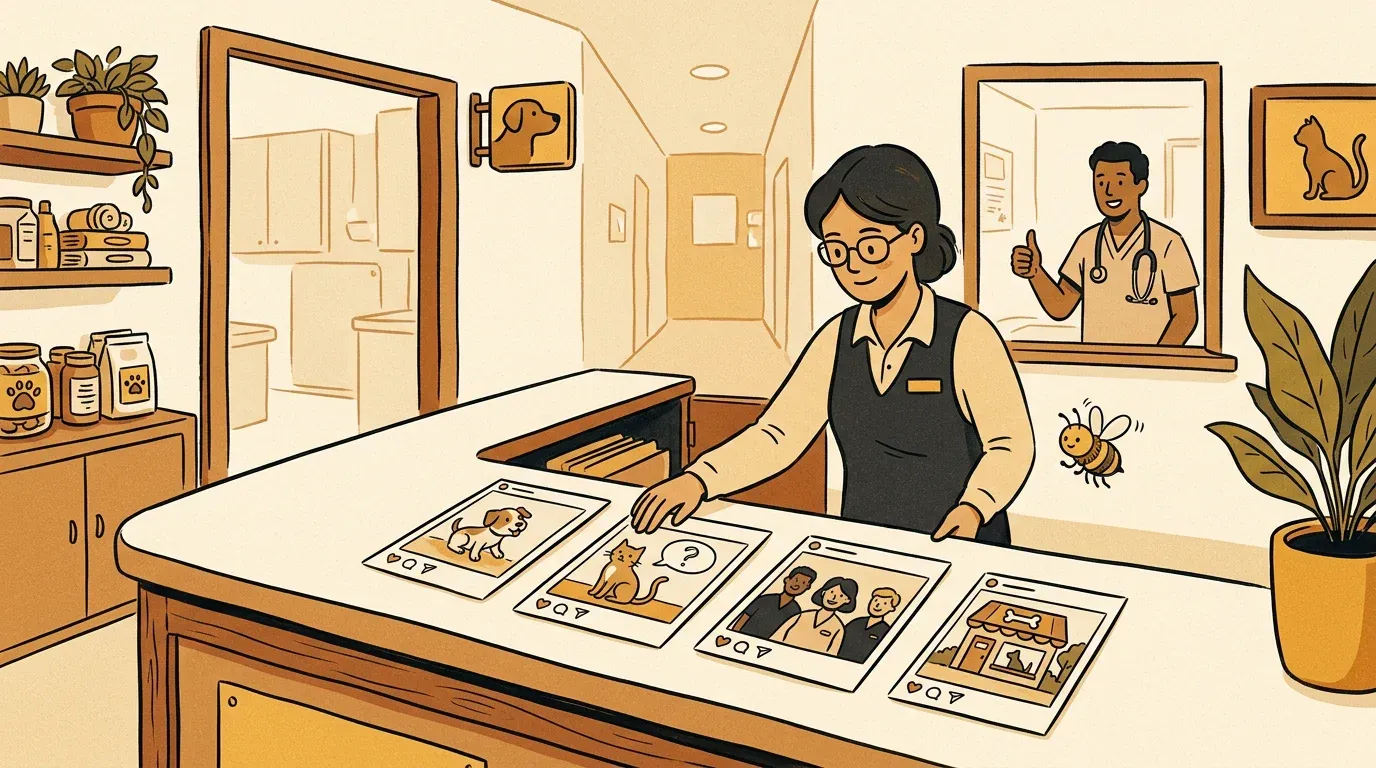
You do not need to post every day. Three or four posts a week is plenty for most clinics. Here is one rhythm that fits around a full schedule:
| Day | Group | Example post | Format | Who checks it |
|---|---|---|---|---|
| Monday | Pet care tip | The first-year puppy visit map (Idea 1) | 5-slide carousel | Practice manager or marketing lead |
| Tuesday | Myth vs. fact | "Do indoor cats still need vaccines?" (Idea 15) | 30-second video | Veterinarian |
| Thursday | First visit or team | Meet the front desk (Idea 30) | Photo or Reel | Practice manager |
| Friday (optional) | Local community or review | Local partner shout-out (Idea 32) | Photo with tag | Practice manager |
Batch the week in one sitting. Write the four captions on Monday morning, have the veterinarian check the two health posts, and schedule them all at once with a social media scheduler. If you want to plan a full month, our guide to building a social media content plan walks through it.
Pet-owner privacy and advertising checklist (before you post) ✅
Veterinary clinics are not covered by HIPAA the way human medical clinics are, but owners still expect you to protect their pets' stories. This is not legal advice, so check with your own advisor and your state board, but these five rules keep most clinics out of trouble:
- Get written marketing permission before you share any client pet photo, video, name, or medical story. A verbal yes in the exam room is not enough. Your clinic should keep a signed social media / marketing release that names the platforms where the content may appear.
- Check the background of every photo and video. No appointment boards, computer screens, charts with names, or other clients in the lobby.
- Never reply to a review with private pet or owner details, even to defend yourself. Thank them and invite them to call the clinic.
- No promises of results. Avoid "cures", "guaranteed", or "will fix" in captions. Explain what you do and let owners decide with their veterinarian.
- Follow professional advertising standards for your practice. The AVMA Principles of Veterinary Medical Ethics are a useful starting point for honesty in communications, alongside your state veterinary board rules.
Worked example: a week of posts in 15 minutes ⏱️
Here is a made-up example to show the flow. "Maple Street Animal Clinic" is a two-doctor practice with one practice manager who also handles social media.
On Monday morning, the practice manager opens Beevi. It has already drafted the week from the clinic's services, tone, and photos: a puppy-year carousel, a myth vs. fact video script for the veterinarian, a meet-the-team post, and a shout-out to the groomer next door. She swaps one generic image for a real photo of the front desk and edits one caption so it sounds like the clinic.
Then comes the safety check. She sends the two health posts to the lead veterinarian through Beevi approvals. Between appointments, the doctor reads them on her phone, fixes one word, and taps approve. Only then do the posts go into the schedule across the clinic's connected accounts.
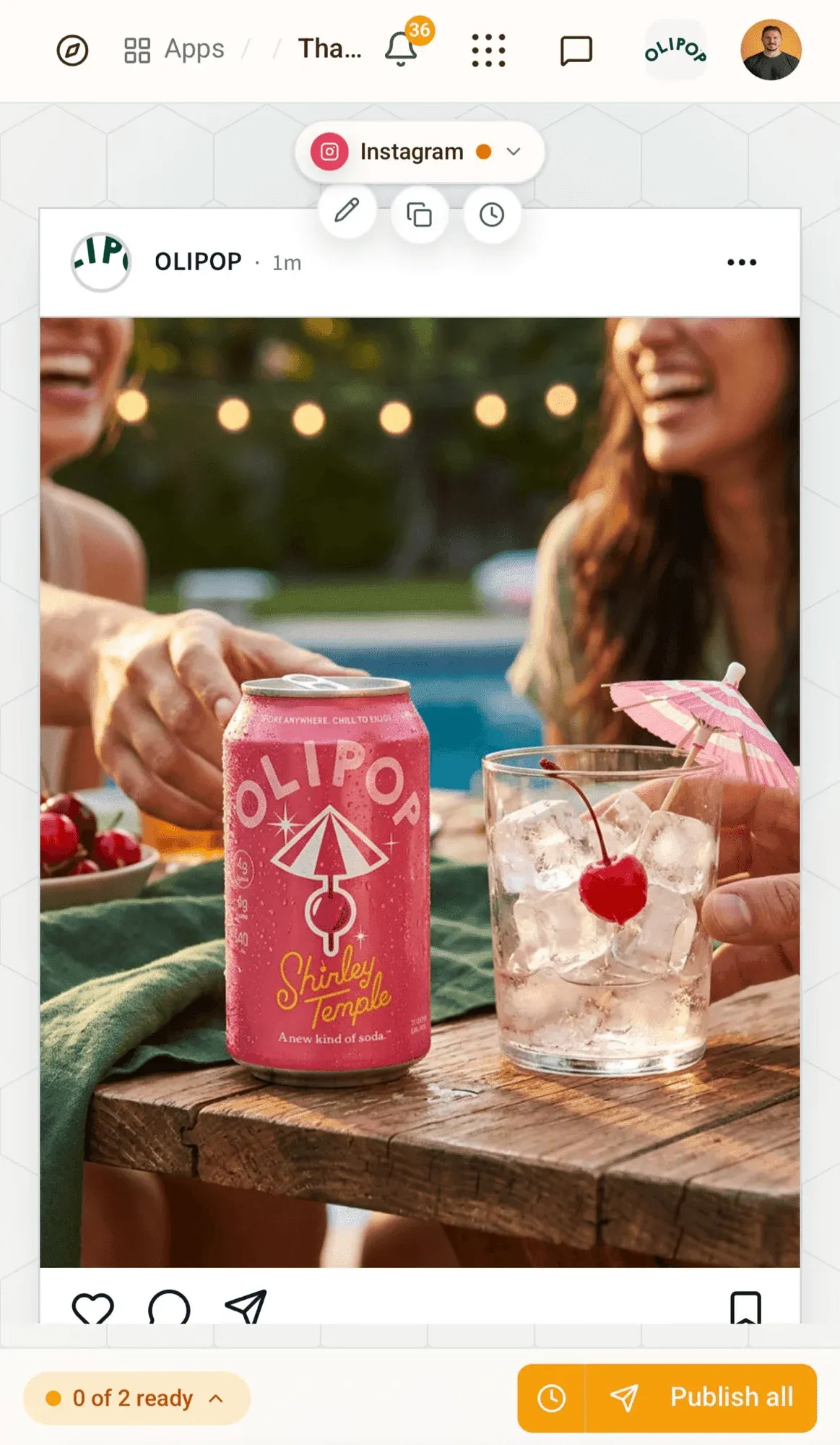
Beevi writes, designs, and posts across six platforms: Instagram, Facebook, LinkedIn (personal profile and Company Page), X, TikTok, and YouTube. You can connect one account per platform in each workspace, and every plan includes approvals. If two doctors and a practice manager all need access, the Local Business plan has up to 5 seats. See current plans on the pricing page.
Beevi is built to save about 5 to 10 hours a week on planning and drafting once the mix is set (a founder estimate, not a survey). You can see how this works for your own clinic when you create your first posts free during onboarding.
Start with three posts next week
You do not need all 40 veterinary social media post ideas at once. Pick one pet care tip your team explained today, one honest answer to a question clients ask, and one friendly photo of your team. Put those three on the calendar, have the veterinarian check the health post, and keep going for a month.
Looking for more ideas for health offices? Our list of dental and medical clinic social media post ideas and chiropractic social media post ideas cover clinic-wide posts, and the what to post today tool gives you a quick idea when you're stuck.
If you want help that drafts the week in your clinic's voice and waits for your approval before anything goes live, create your first posts free or compare plans on our pricing page.